Acrylic vs Tempered Glass: A Complete Comparison

Informational

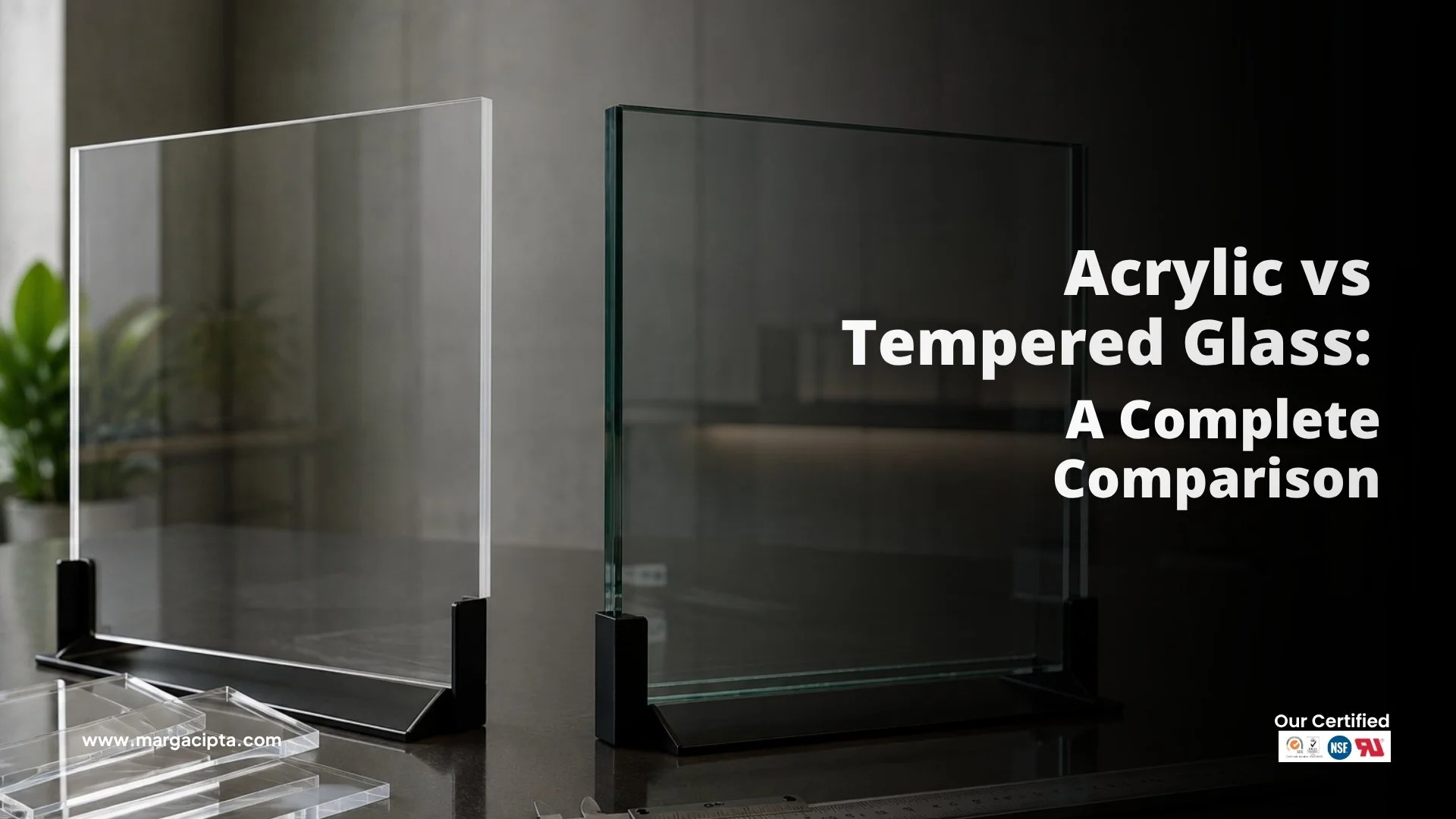
When comparing acrylic vs tempered glass, acrylic is generally the better choice for applications requiring lightweight construction, design flexibility, and impact resistance, while tempered glass is preferred for environments that demand superior scratch resistance and heat tolerance.

Although both materials offer excellent transparency, they differ significantly in weight, durability, fabrication, and cost. Understanding these differences helps businesses, designers, and fabricators select the most suitable material for their projects.

Acrylic vs Tempered Glass at a Glance

Here's a quick comparison.

Feature Acrylic Tempered Glass
Transparency Excellent Excellent
Weight Lightweight Heavy
Impact Resistance High Moderate
Scratch Resistance Moderate Excellent
Fabrication Easy Limited
Custom Shapes Excellent Difficult
Breakage Less likely to shatter Can shatter into small pieces

Both materials have strengths, but the best option depends on the intended application.

Read also: Best Acrylic Thickness for Ornaments: Size Guide for Perfect Results

Weight

One of acrylic's biggest advantages is its lightweight construction.

Acrylic sheets weigh approximately half as much as glass, making them easier to:

  • Transport
  • Install
  • Handle
  • Fabricate

For large signage, exhibition booths, and retail displays, this weight reduction can significantly lower installation effort and transportation costs.

Impact Resistance

Although tempered glass is much stronger than standard glass, acrylic generally offers higher impact resistance.

If subjected to accidental impact, acrylic is less likely to shatter into fragments.

This makes acrylic suitable for:

  • Retail displays
  • Protective barriers
  • Machine guards
  • Product showcases
  • Public display systems

Optical Clarity

Both materials provide excellent transparency.

Premium cast acrylic offers exceptional optical clarity that closely resembles glass while maintaining a lighter structure.

For many commercial applications, customers experience little visual difference between high-quality acrylic and tempered glass.

Fabrication Flexibility

Acrylic is significantly easier to fabricate.

It can be:

  • Laser cut
  • CNC machined
  • Thermoformed
  • Engraved
  • UV printed
  • Polished

Tempered glass, however, must be cut and processed before the tempering process. Once tempered, it cannot be drilled or reshaped.

This makes acrylic the preferred material for custom fabrication projects.

Cost Considerations

Project cost extends beyond the material price.

Because acrylic is lighter and easier to fabricate, businesses often benefit from:

  • Lower transportation costs
  • Faster installation
  • Reduced breakage risk
  • More affordable customization

These advantages can improve the overall cost efficiency of a project.

Common Applications

Acrylic

Ideal for:

  • Signage
  • Retail displays
  • Exhibition booths
  • Product displays
  • Interior design
  • Decorative panels

Tempered Glass

Commonly used for:

  • Shower enclosures
  • Building windows
  • Glass doors
  • Safety glazing
  • Architectural installations

Read also: Laser Cut Acrylic Sheet: Benefits, Applications, and Design Tips

Why High-Quality Acrylic Matters

The performance of acrylic depends on its quality.

Premium cast acrylic sheets provide:

  • Superior clarity
  • Better weather resistance
  • Consistent thickness
  • Excellent fabrication performance
  • Long-lasting durability

Marga Cipta manufactures premium cast acrylic sheets suitable for signage, displays, architecture, industrial fabrication, and custom projects.

Conclusion

When comparing acrylic vs tempered glass, acrylic offers greater versatility, lighter weight, and easier fabrication, making it the preferred material for many commercial and design applications.

For projects requiring custom fabrication, premium appearance, and long-term performance, high-quality acrylic sheets provide an excellent solution.

Source Premium Acrylic Sheets from Marga Cipta

Marga Cipta supplies premium cast acrylic sheets in various thicknesses, colors, and finishes for signage, displays, architectural projects, and custom fabrication.

For inquiries or orders, email info@margacipta.com.

For product updates, inspiration, and application ideas, follow Instagram @margacipta.


News Release

Why MC® Cast Acrylic Sheet Poster Boxes Are the Perfect Display Solution

Why MC® Cast Acrylic sheets Are the Perfect Display Solution

In today’s competitive market, businesses and event organizers need display solutions that not only look professional but also endure constant use. MC® cast acrylic sheets are the superior choice, offering unmatched clarity, durability, and versatility. Whether you’re showcasing promotions, advertisements, menus, or event highlights, these poster boxes ensure your message stands out in any environment. Discover why MC® cast acrylic sheets are the perfect investment for your displays.

Unparalleled Durability for Long-Term Use

Durability is a non-negotiable feature for poster displays, especially in high-traffic areas like retail stores, exhibitions, and public spaces. MC® cast acrylic poster boxes are made to withstand everyday wear and tear with superior robustness. Unlike glass, which is prone to shattering and cracking, cast acrylic offers:

  • Impact Resistance: Acrylic is up to 17 times stronger than glass, making it ideal for busy environments where accidental bumps and knocks occur.
  • Scratch Resistance: MC® cast acrylic maintains its smooth, polished appearance even with frequent handling and exposure to external elements.
  • Weather Resistance: Whether indoors or outdoors, these poster boxes resist weather changes without warping, cracking, or fading.

Investing in durable MC® cast acrylic sheets guarantees displays that look new and professional for years to come.

Superior Clarity with 100% Virgin MMA

When it comes to visual displays, clarity matters. MC® cast acrylic sheets are crafted using 100% virgin Methyl Methacrylate (MMA), ensuring unparalleled purity and optical clarity. This premium material offers several advantages over recycled acrylic or glass:

  • Crystal-Clear Transparency: With light transmission of up to 92%, MC® acrylic delivers vibrant, sharp visuals that attract attention.
  • No Yellowing or Clouding: Unlike lower-grade materials, virgin MMA acrylic resists yellowing or clouding over time, preserving its clarity for years.
  • UV Stability: The material’s UV resistance ensures that your posters remain bright and clear even with prolonged exposure to sunlight.

By using virgin MMA, MC® sets the gold standard for display solutions that combine beauty and longevity.

Modern, Elegant Design to Elevate Your Displays

First impressions matter, and MC® cast acrylic sheets deliver a sleek, modern design that enhances the appeal of any setting. Whether placed in retail stores, hotels, restaurants, or exhibition halls, these poster boxes exude professionalism with their:

  • Glossy Finish: The polished surface creates a sophisticated look that naturally attracts attention.
  • Frameless Design: A clean, seamless appearance ensures the focus stays on your content.
  • Customizable Options: Available in various sizes and configurations, our cast acrylic sheets can be tailored to your specific display needs.

The combination of aesthetic appeal and functionality makes these poster boxes the preferred choice for businesses aiming to leave a lasting impression.

Lightweight Construction for Easy Handling and Installation

One of the standout features of MC® cast acrylic sheets is their lightweight nature. Acrylic is significantly lighter than glass, making it much easier to transport, install, and update. Key benefits include:

  • Effortless Installation: Whether mounted on walls, suspended from ceilings, or placed on countertops, these poster boxes require minimal effort for setup.
  • Safe Handling: The lightweight design eliminates the risk of injury or damage during installation or replacement.
  • Flexible Usage: Perfect for temporary displays or frequently updated content, businesses can swap posters quickly without hassle.

The user-friendly nature of MC® acrylic sheets saves time, labor, and resources, making them ideal for dynamic marketing environments.

UV Resistance for Long-Lasting Vibrancy

Sunlight can wreak havoc on traditional posters, causing colors to fade and materials to deteriorate. MC® cast acrylic sheets feature excellent UV resistance, protecting your displays from the damaging effects of sunlight. This feature offers:

  • Fade-Free Posters: Your advertisements, promotions, or artwork remain vibrant and sharp over extended periods.
  • Outdoor Durability: Perfect for outdoor displays, MC® acrylic resists weather conditions without compromising visual appeal.
  • Cost Efficiency: By extending the lifespan of your posters, businesses save on replacement and reprinting costs.

For businesses looking for reliable and long-lasting outdoor display solutions, MC® cast acrylic sheets deliver exceptional performance.


Conclusion

In a world where visual impact matters more than ever, MC® cast acrylic sheets deliver on every front. From exceptional durability and unmatched clarity to UV resistance and modern design, these poster boxes are ideal for businesses and events looking to create professional, lasting impressions. By investing in MC® cast acrylic sheets, businesses ensure their messages remain vibrant, engaging, and effective for years to come.

Acrylic Sheet Price Factors: What Affects the Cost of Acrylic Sheets?

The cost of acrylic sheets depends on several factors, including material type, thickness, sheet size, surface finish, and fabrication requirements.

Understanding these factors can help businesses and buyers make informed purchasing decisions while selecting the right acrylic sheet for their applications.

Whether you're sourcing acrylic for signage, displays, interiors, or industrial projects, knowing what influences pricing can help you better plan your budget.

Why Acrylic Sheet Prices Vary

Not all acrylic sheets are manufactured the same way. Different production methods, material specifications, and finishing options can significantly impact the final cost.

The price of acrylic sheets reflects both the material quality and the intended application.

Read also: Why Cast Acrylic Is Better Than Glass: Benefits You Should Know

1. Type of Acrylic Sheet

One of the biggest factors affecting cost is the type of acrylic used.

Cast Acrylic

Cast acrylic is typically more expensive because it offers:

  • Better optical clarity
  • Superior engraving quality
  • Improved chemical resistance
  • Better overall finish

It is commonly used for premium signage, displays, and decorative applications.

Extruded Acrylic

Extruded acrylic is generally more cost-effective and suitable for standard fabrication projects. While it offers good performance, it may not provide the same level of quality as cast acrylic for certain applications.

2. Thickness of the Sheet

Thicker acrylic sheets require more raw material, resulting in higher costs.

For example:

  • 2 mm acrylic sheets are generally more affordable
  • 10 mm acrylic sheets cost significantly more due to increased material usage

Choosing the right thickness helps balance performance and budget.

3. Sheet Size and Dimensions

Larger acrylic sheets naturally cost more because they contain more material.

Custom sizes may also affect pricing due to:

  • Additional cutting processes
  • Material optimization requirements
  • Production efficiency considerations

Selecting standard sheet sizes can sometimes help reduce costs.

4. Surface Finish

Different finishes influence manufacturing complexity and pricing.

Common options include:

  • Clear acrylic
  • Satin acrylic
  • Frosted acrylic
  • Colored acrylic
  • Mirrored acrylic

Specialty finishes often carry higher costs because of additional production processes.

5. Color and Design Requirements

Colored acrylic sheets typically cost more than standard clear acrylic sheets.

Factors that contribute to pricing include:

  • Pigment quality
  • Color consistency
  • Manufacturing complexity

Special or custom colors may further impact overall costs.

6. Fabrication Requirements

Additional processing services can increase the total project cost.

Examples include:

  • Laser cutting
  • CNC cutting
  • Engraving
  • UV printing
  • Edge polishing

The more complex the fabrication process, the higher the final cost is likely to be.

7. Material Quality

Premium acrylic sheets often provide:

  • Better clarity
  • More consistent thickness
  • Improved durability
  • Better weather resistance

While higher-quality materials may have a higher initial price, they often deliver better long-term value and performance.

Read also: Clear Acrylic Sheet vs Glass: Pros, Cons & Key Differences

How to Optimize Acrylic Costs

To maximize value:

  • Choose the appropriate thickness
  • Select the right acrylic type
  • Avoid unnecessary customizations
  • Source materials from trusted suppliers

A well-planned specification helps achieve both performance and cost efficiency

Conclusion

Several acrylic sheet price factors influence the overall cost of a project, including material type, thickness, size, finish, and fabrication requirements.

Understanding these variables allows buyers to select the most suitable acrylic sheet while managing budgets effectively. Investing in high-quality acrylic can also provide long-term benefits through improved durability and performance.

Want to Order High-Quality Acrylic Sheets?

Marga Cipta offers premium acrylic sheets in various thicknesses, colors, and finishes for signage, displays, interiors, and fabrication projects.

For inquiries or orders, email info@margacipta.com.

For product updates, inspiration, and application ideas, follow Instagram @margacipta.

What Acrylic to Use for Cake Topper: A Complete Material Guide

If you are planning to create cake toppers, one of the most common questions is: what acrylic to use for cake topper projects? Choosing the right type of acrylic is essential to ensure durability, clean cuts, and a professional finish.

With various options available, understanding the basics of acrylic sheets will help you make the right decision for your needs.

Understanding Acrylic Types

There are two main types of acrylic sheets: cast acrylic and extruded acrylic.

Cast acrylic is generally preferred for cake toppers because it offers better optical clarity and superior engraving results. It also responds well to laser cutting, producing smooth and polished edges.

Extruded acrylic, while more affordable, is softer and may not deliver the same level of detail when engraved or cut. However, it can still be used for simpler designs or cost-sensitive projects.

Read also: Best Acrylic Sheet for Cake Topper: Thickness, Finish & Tips

1. Choosing the Right Thickness

Thickness is another important factor when deciding what acrylic to use.

For most cake topper applications, a thickness of 2 mm to 3 mm is recommended. This range provides enough strength to hold its shape while still being easy to cut and handle.

If your design is larger or more complex, opting for 3 mm acrylic can provide additional stability. Thinner sheets may bend, while thicker ones can be harder to work with.

2. Selecting the Right Finish

The finish of the acrylic sheet will influence the final look of your cake topper.

Clear acrylic is the most versatile option, offering a modern and elegant appearance. It is ideal for weddings, corporate events, and minimalist designs.

Colored acrylic sheets are perfect for creating bold and eye-catching toppers. Popular choices include black, white, gold, and pastel shades.

Frosted acrylic is another option for achieving a soft, diffused look, while mirrored acrylic can add a luxurious touch.

3. Compatibility with Fabrication Methods

When deciding what acrylic to use for cake topper production, it is important to consider your fabrication method.

Laser cutting is the most commonly used technique, and high-quality acrylic sheets will ensure precise cuts and smooth edges. Acrylic also works well with UV printing and engraving, allowing for customized designs and branding.

Choosing the right material ensures fewer defects and better overall results during production.

Read also: Acrylic Sheet for Display Stand: Best Thickness and Type to Use

Why Material Quality Matters

Using high-quality acrylic sheets is key to achieving consistent and professional outcomes. Low-quality materials may have uneven thickness, poor clarity, or be prone to cracking during cutting.

For businesses, investing in premium acrylic sheets helps maintain product quality and reduces waste during production.

Working with a trusted supplier ensures that you get reliable materials that meet your production standards.

Conclusion

Understanding what acrylic to use for cake topper projects comes down to selecting the right type, thickness, and finish. Cast acrylic with a thickness of 2 mm to 3 mm is generally the best choice for most applications.

By choosing high-quality acrylic sheets and using proper fabrication techniques, you can create cake toppers that are not only durable but also visually appealing and professional.

Still unsure what acrylic to use for your cake topper? Marga Cipta offers a wide range of high-quality acrylic sheets in various thicknesses and finishes to suit your project requirements.

Contact us at info@margacipta.com or our Instagram to order and get the best material for your production needs. 

Best Material for Display Stand: Acrylic or Glass?

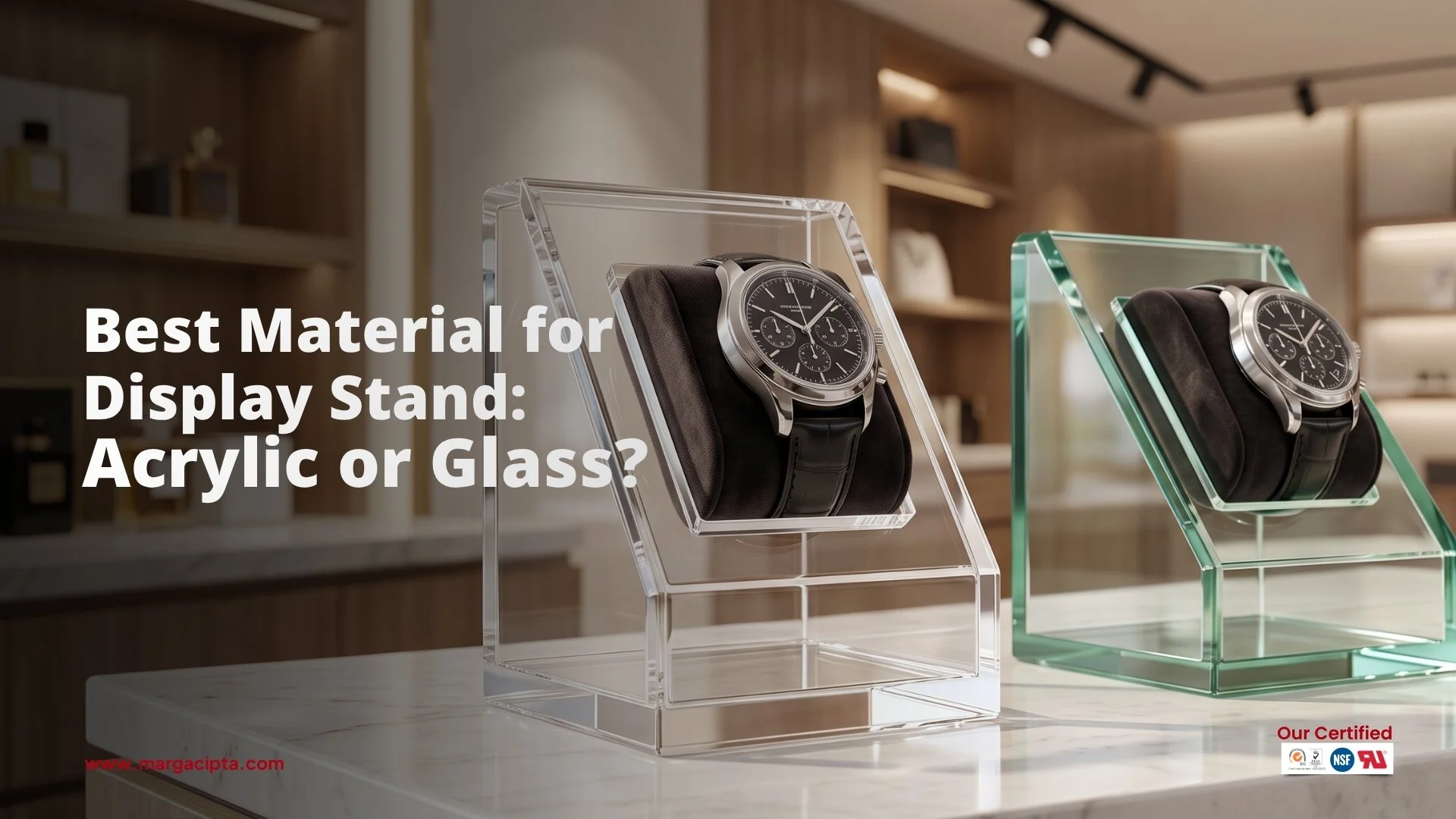
For most retail and commercial applications, acrylic is generally the best material for display stands. It provides excellent transparency, is significantly lighter than glass, offers better impact resistance, and is easier to fabricate into custom designs.

While glass remains a premium material for certain luxury applications, acrylic delivers a more practical balance of aesthetics, durability, and cost efficiency.

Acrylic vs Glass at a Glance

Here's a quick comparison between the two materials.

Feature Acrylic Glass
Transparancy Excellent Excellent
Weight Lightweight Heavy
Impact Resistance High Low
Fabrication Easy Limited
Customization Excellent Moderate
Cost Efficiency High Moderate

For most display stand projects, acrylic provides greater flexibility without sacrificing appearance.

Read also: Acrylic Sheet for Retail Displays: Benefits, Applications, and Design Ideas

Clarity and Appearance

Both acrylic and glass offer a clean, transparent look that showcases products effectively.

However, high-quality acrylic sheets provide excellent optical clarity while offering more design flexibility through various finishes, including:

  • Clear
  • Frosted
  • Satin
  • Colored
  • Mirrored

These options allow businesses to create customized displays that match their branding.

Durability

Display stands are frequently moved, cleaned, and handled.

Acrylic performs well because it is more impact-resistant than glass. If accidentally dropped or bumped, acrylic is less likely to shatter.

Glass, while visually elegant, is more fragile and requires careful handling during transportation and installation.

Weight and Installation

Acrylic is considerably lighter than glass, making it easier to:

  • Transport
  • Install
  • Rearrange
  • Store

This advantage is especially valuable for exhibition displays, retail promotions, and modular merchandising systems.

Fabrication Flexibility

One of acrylic's biggest advantages is its compatibility with modern fabrication methods.

Acrylic sheets can be:

  • Laser cut
  • CNC machined
  • Thermoformed
  • Engraved
  • UV printed

This allows designers to produce highly customized display stands with clean edges and intricate details.

Glass generally requires more specialized processing and offers fewer customization options.

Cost Considerations

Acrylic is often the more cost-effective solution.

Lower transportation costs, easier fabrication, and reduced breakage risks contribute to better overall project value.

For businesses producing multiple display stands, acrylic offers significant long-term savings.

When Glass May Be Suitable

Although acrylic is preferred for most applications, glass may still be suitable for:

  • Luxury furniture
  • Permanent architectural installations
  • High-end decorative displays

However, these projects often involve higher installation costs and stricter handling requirements.

Read also: How to Bend Acrylic Sheet: Methods, Tools, and Best Practices

Why Material Quality Matters

Regardless of the material chosen, quality has a direct impact on the final result.

Premium acrylic sheets provide:

  • Better clarity
  • Consistent thickness
  • Cleaner fabrication
  • Improved durability
  • Long-lasting appearance

Marga Cipta supplies high-quality acrylic sheets suitable for display stands, retail displays, product showcases, and commercial fabrication projects.

Conclusion

When comparing the best material for display stand—acrylic or glass—acrylic is the preferred choice for most retail, commercial, and promotional applications.

Its combination of clarity, lightweight construction, durability, and fabrication flexibility makes it a reliable solution for modern display systems.

Build Better Display Stands with Marga Cipta

Looking for premium acrylic sheets for your next display project? Marga Cipta offers high-quality acrylic sheets in various sizes, thicknesses, and finishes to meet your fabrication needs.

For inquiries or orders, email info@margacipta.com.

For product updates, inspiration, and application ideas, follow Instagram @margacipta.